Electric Smoker OR Landfill: What say you?


-
A little more progress over the last couple days.
I cut air intake openings in the bottom of the cabinet and added a metal enclosure to hold the A-mazing pellet smoker. Some may recognize the box as an old ammo can with the lid removed.The reason for putting the smoker on the outside of the chamber is two-fold. First, having it on the outside in its own enclosure means you can tend it without opening the door of the smoker. Secondly, having your smoke fuel in the heated part of the smoker can sometimes lead to a condition where its harder to keep the pellets lit due to low oxygen levels inside the smoker.
Having the smoke source outside like this should make cold smoking a very viable option.
I was really curious to see how the A-mazing pellet smoker would work in an unheated cabinet so I fired it up and it made a good smoke. The smoke draw through the cabinet was plentiful and exceeded my expectation. The next test will be to see how the heating element affects the smoke draw. I expect that the heated air and convection will improve the smoke draw.
While cutting and hacking holes in the sheet metal, I am happy to report all injuries were minor. lol


processhead that is awesome. Great work
-
processhead Here’s a resource for oven design.
https://www.alkar.com/service/technicalreports/OvenDesign.pdf
-
processhead Here’s a resource for oven design.
https://www.alkar.com/service/technicalreports/OvenDesign.pdf
Pivodog Thanks!
-
Dang processhead I thought that building a smoker would have been easier than building my dry curing/meat aging chamber but I was wrong. I am bookmarking this thread in case I get the bug to build. Well done sir!!
-
Just updating my progress over the last couple of weeks. First, I built a heat diffuser to help spread out the direct radiation from the hot plate. One of the old SS shelves from a previous smoker project worked nicely and just needed some legs which I made from all-thread rod.
Next, I did some panel fabrication for the Inkbird PID controller. Again, just used materials I had laying around for the panel and standoffs that went inside the box. Once completed, the box was attached to the door of the smoker.
Wiring from the controller box was fished in through the interior of the door and out the side. The wiring was run between the outer layer of sheet metal and the insulation which is the cool side.
Next the wiring is routed though flexible conduit and into the inner cavity of the main chamber. This provides a flexible, durable route for the temperature controller wiring on the door to get it into the main compartment.


Paul
-
Just updating my progress over the last couple of weeks. First, I built a heat diffuser to help spread out the direct radiation from the hot plate. One of the old SS shelves from a previous smoker project worked nicely and just needed some legs which I made from all-thread rod.
Next, I did some panel fabrication for the Inkbird PID controller. Again, just used materials I had laying around for the panel and standoffs that went inside the box. Once completed, the box was attached to the door of the smoker.
Wiring from the controller box was fished in through the interior of the door and out the side. The wiring was run between the outer layer of sheet metal and the insulation which is the cool side.
Next the wiring is routed though flexible conduit and into the inner cavity of the main chamber. This provides a flexible, durable route for the temperature controller wiring on the door to get it into the main compartment.
processhead what an amazing job you are doing.
-
Just updating my progress over the last couple of weeks. First, I built a heat diffuser to help spread out the direct radiation from the hot plate. One of the old SS shelves from a previous smoker project worked nicely and just needed some legs which I made from all-thread rod.
Next, I did some panel fabrication for the Inkbird PID controller. Again, just used materials I had laying around for the panel and standoffs that went inside the box. Once completed, the box was attached to the door of the smoker.
Wiring from the controller box was fished in through the interior of the door and out the side. The wiring was run between the outer layer of sheet metal and the insulation which is the cool side.
Next the wiring is routed though flexible conduit and into the inner cavity of the main chamber. This provides a flexible, durable route for the temperature controller wiring on the door to get it into the main compartment.
processhead Fantastic. When this is finished, it will need to be preserved in a special How To category of it’s own, Not sure if Jonathon can do something like that.
-
Just updating my progress over the last couple of weeks. First, I built a heat diffuser to help spread out the direct radiation from the hot plate. One of the old SS shelves from a previous smoker project worked nicely and just needed some legs which I made from all-thread rod.
Next, I did some panel fabrication for the Inkbird PID controller. Again, just used materials I had laying around for the panel and standoffs that went inside the box. Once completed, the box was attached to the door of the smoker.
Wiring from the controller box was fished in through the interior of the door and out the side. The wiring was run between the outer layer of sheet metal and the insulation which is the cool side.
Next the wiring is routed though flexible conduit and into the inner cavity of the main chamber. This provides a flexible, durable route for the temperature controller wiring on the door to get it into the main compartment.
processhead I have been eyeing up a few food warming cases for a possible winter project. Unfortunately not quite as cheap as Chef has found them. I think I will need to look in larger metro areas, I have time.
-
I have been working on getting the power and control wiring finished and operational. I prefer to keep most of the wiring enclosed in conduit and covered electrical boxes or internal covered channels in the cabinet itself.
The exception is the the power cord to the hot plate which I could have hard wired into the system, but instead I left it with the original cord and plug and installed a receptacle underneath for it to plug in to. This will make it easier to replace if the element ever burns out or needs to be changed for some other reason.

Black cube shaped object is the Solid State Relay or SSR . It takes the low power control signal from the PID and switches the 120 volt AC current on and off to the hot plate inside.
SSRs generate some heat when they are switched on and need to be mounted to a metal surface or heat sink to absorb the heat.
In this case, the outer sheet metal cabinet of the smoker is acting as the heat sink.
Since the smoker is usually operated outside, I installed a GFCI device for safety. The case of the smoker is grounded through the power cord, also for safety.
The toggle switch is the main power switch for the unit. Both the GFCI and the toggle switch are rated for 20 amp service. I used a 15 foot long piece of 14 gauge cord to give the smoker a little more reach to an outlet.


The picture below was when I was trying out the auto tune function of the PID. Not great, but probably acceptable for a smoker.
Manual tuning of the PID did work pretty well though, and was holding temps consistently within +/- 2 degrees from the set point. I plan to do more tuning and testing with some pans of water in the smoker to simulate a load of meat or sausage.


Paul
-
I have been working on getting the power and control wiring finished and operational. I prefer to keep most of the wiring enclosed in conduit and covered electrical boxes or internal covered channels in the cabinet itself.
The exception is the the power cord to the hot plate which I could have hard wired into the system, but instead I left it with the original cord and plug and installed a receptacle underneath for it to plug in to. This will make it easier to replace if the element ever burns out or needs to be changed for some other reason.
Black cube shaped object is the Solid State Relay or SSR . It takes the low power control signal from the PID and switches the 120 volt AC current on and off to the hot plate inside.
SSRs generate some heat when they are switched on and need to be mounted to a metal surface or heat sink to absorb the heat.
In this case, the outer sheet metal cabinet of the smoker is acting as the heat sink.Since the smoker is usually operated outside, I installed a GFCI device for safety. The case of the smoker is grounded through the power cord, also for safety.
The toggle switch is the main power switch for the unit. Both the GFCI and the toggle switch are rated for 20 amp service. I used a 15 foot long piece of 14 gauge cord to give the smoker a little more reach to an outlet.
The picture below was when I was trying out the auto tune function of the PID. Not great, but probably acceptable for a smoker.
Manual tuning of the PID did work pretty well though, and was holding temps consistently within +/- 2 degrees from the set point. I plan to do more tuning and testing with some pans of water in the smoker to simulate a load of meat or sausage.
processhead Looking pretty awsome!!
-
I have been working on getting the power and control wiring finished and operational. I prefer to keep most of the wiring enclosed in conduit and covered electrical boxes or internal covered channels in the cabinet itself.
The exception is the the power cord to the hot plate which I could have hard wired into the system, but instead I left it with the original cord and plug and installed a receptacle underneath for it to plug in to. This will make it easier to replace if the element ever burns out or needs to be changed for some other reason.
Black cube shaped object is the Solid State Relay or SSR . It takes the low power control signal from the PID and switches the 120 volt AC current on and off to the hot plate inside.
SSRs generate some heat when they are switched on and need to be mounted to a metal surface or heat sink to absorb the heat.
In this case, the outer sheet metal cabinet of the smoker is acting as the heat sink.Since the smoker is usually operated outside, I installed a GFCI device for safety. The case of the smoker is grounded through the power cord, also for safety.
The toggle switch is the main power switch for the unit. Both the GFCI and the toggle switch are rated for 20 amp service. I used a 15 foot long piece of 14 gauge cord to give the smoker a little more reach to an outlet.
The picture below was when I was trying out the auto tune function of the PID. Not great, but probably acceptable for a smoker.
Manual tuning of the PID did work pretty well though, and was holding temps consistently within +/- 2 degrees from the set point. I plan to do more tuning and testing with some pans of water in the smoker to simulate a load of meat or sausage.
processhead This is looking real nice, any estimate on what the total cost is going to end up being?
-
processhead This is looking real nice, any estimate on what the total cost is going to end up being?
bocephus said in Electric Smoker OR Landfill: What say you?:
processhead This is looking real nice, any estimate on what the total cost is going to end up being?
I would estimate new materials costs at $100. Sometimes its hard to estimate total cost because I have a pretty large inventory of miscellaneous hardware, wire and other materials that cost me little or nothing.
Conservatively, I would estimate total material costs still under $150.
-
I have been working on getting the power and control wiring finished and operational. I prefer to keep most of the wiring enclosed in conduit and covered electrical boxes or internal covered channels in the cabinet itself.
The exception is the the power cord to the hot plate which I could have hard wired into the system, but instead I left it with the original cord and plug and installed a receptacle underneath for it to plug in to. This will make it easier to replace if the element ever burns out or needs to be changed for some other reason.
Black cube shaped object is the Solid State Relay or SSR . It takes the low power control signal from the PID and switches the 120 volt AC current on and off to the hot plate inside.
SSRs generate some heat when they are switched on and need to be mounted to a metal surface or heat sink to absorb the heat.
In this case, the outer sheet metal cabinet of the smoker is acting as the heat sink.Since the smoker is usually operated outside, I installed a GFCI device for safety. The case of the smoker is grounded through the power cord, also for safety.
The toggle switch is the main power switch for the unit. Both the GFCI and the toggle switch are rated for 20 amp service. I used a 15 foot long piece of 14 gauge cord to give the smoker a little more reach to an outlet.
The picture below was when I was trying out the auto tune function of the PID. Not great, but probably acceptable for a smoker.
Manual tuning of the PID did work pretty well though, and was holding temps consistently within +/- 2 degrees from the set point. I plan to do more tuning and testing with some pans of water in the smoker to simulate a load of meat or sausage.
-
Boy that sure looks better than if it went in the landfill. Great job
-
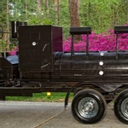
I am a fan of casters on equipment, so this smoker is getting some. Old feet off, enlarge tapped holes for 3/8 inch threaded casters and we be rollin.


Now that its outside, making a little smoke.

Paul
-
I am a fan of casters on equipment, so this smoker is getting some. Old feet off, enlarge tapped holes for 3/8 inch threaded casters and we be rollin.
Now that its outside, making a little smoke.
processhead I agree the casters are the way to go.
-
processhead I agree the casters are the way to go.
bocephus said in Electric Smoker OR Landfill: What say you?:
processhead I agree the casters are the way to go.
At age 50 I started putting casters on everything I own. Best thing I ever did. lol









Hello! It looks like you're interested in this conversation, but you don't have an account yet.
Getting fed up of having to scroll through the same posts each visit? When you register for an account, you'll always come back to exactly where you were before, and choose to be notified of new replies (either via email, or push notification). You'll also be able to save bookmarks and upvote posts to show your appreciation to other community members.
With your input, this post could be even better 💗
Register LoginSponsored By: