Electric Smoker OR Landfill: What say you?
-
have you thought about a dry curing cabinet
-
I have built a few electric smokers over the years, but have not done any recently.
My old upright freezer died a couple of weeks ago, and it has the makings of a pretty decent meat smoker, I think.
It is insulated of course, and has a metal interior. The door shelving is plastic and would need to go. That could be replaced with sheet metal.I don’t really NEED another meat smoker, but I have a hard time resisting the urge to hack.
I put it up to the community for a vote: Thumbs up: meat smoker. Thumbs down: landfill.
I reserve ultimate veto power. lol


processhead smoker for sure! And I think you need to document and show the progress here on Meatgistics! Maybe you will inspire some of us to try tackling a homebuilt electic smoker with PID controller!
-
processhead
Agree. I’ve watched a few videos on it and read some posts but definitely not at the point where I would trust letting something sit to cure long term in something I built without having a better grasp of the concepts involved. They make it look pretty plug and play with the inkbird humidity and temperature controllers but still not there yet. I have a ton to learn about fresh and short cured products first.Surg The accuracy of humidity and temperature was a concern to me, but then I think that for several hundreds of years, people were successful without a control at all. Even long curing’s like Prosciutto which can take as long as 3 years were successful in Spain and Italy starting around 100 BC.
I figure if they could do it, I should be able to do it.
I’m just trying to get the circulation requirements to maintain the humidity in range.
-
Surg The accuracy of humidity and temperature was a concern to me, but then I think that for several hundreds of years, people were successful without a control at all. Even long curing’s like Prosciutto which can take as long as 3 years were successful in Spain and Italy starting around 100 BC.
I figure if they could do it, I should be able to do it.
I’m just trying to get the circulation requirements to maintain the humidity in range.
Chef
Great point. Maybe I will start keeping an eye out for used frost free fridges again. Alway love a good project.

-
Surg The accuracy of humidity and temperature was a concern to me, but then I think that for several hundreds of years, people were successful without a control at all. Even long curing’s like Prosciutto which can take as long as 3 years were successful in Spain and Italy starting around 100 BC.
I figure if they could do it, I should be able to do it.
I’m just trying to get the circulation requirements to maintain the humidity in range.
Chef said in Electric Smoker OR Landfill: What say you?:
Surg The accuracy of humidity and temperature was a concern to me, but then I think that for several hundreds of years, people were successful without a control at all. Even long curing’s like Prosciutto which can take as long as 3 years were successful in Spain and Italy starting around 100 BC.
I figure if they could do it, I should be able to do it.
I’m just trying to get the circulation requirements to maintain the humidity in range.
As I understand it, some local and regional climates were naturally conducive to dry curing and so the process flourished from a very early time.
In other parts of the world, some have learned to manipulate the environment to make dry curing possible.
I think we, or me anyway, are in the latter category.Paul
-
Chef said in Electric Smoker OR Landfill: What say you?:
Surg The accuracy of humidity and temperature was a concern to me, but then I think that for several hundreds of years, people were successful without a control at all. Even long curing’s like Prosciutto which can take as long as 3 years were successful in Spain and Italy starting around 100 BC.
I figure if they could do it, I should be able to do it.
I’m just trying to get the circulation requirements to maintain the humidity in range.
As I understand it, some local and regional climates were naturally conducive to dry curing and so the process flourished from a very early time.
In other parts of the world, some have learned to manipulate the environment to make dry curing possible.
I think we, or me anyway, are in the latter category.processhead Chef Surg I picked up a reach in coolers from a business closing down to transform in a curing chamber. I have air circulation, temperature control only working on humidity control. Life has gotten a bit in the way recently so it has been on the backed burner. I have done some reading and some recommend having two set up as the curing process moves along; you can change the environment of the product. This allows you to move the product into to a less humid environment as it matures. Allowing you to continue the curing environment in the first cabinet.
-
You got to do it. It’s just to cool of an idea to not do
-
A smoker-build thread seems to have a lot of interest so I will go ahead with it.
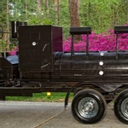
Disclaimer, this is for information purposes. If you don’t have the skills or tools to work with electricity and power tools, consider just buying a smoker or getting help from someone who has the skills.I started reviewing different heat sources last night. On other builds I have used 1000 watt single burner hot plate elements and they generally work pretty well with smaller cabinets. On my large smoker build I used a 2400 watt electric oven element .
From past experience in dealing with various sizes of smoker cabinets, I have a general idea how much heat capacity (watts) is needed to work well for smoking. The key general point to know is that the larger the box, the more heating capacity (watts) will be needed to get the contents up to temperature and hold it there.
Another consideration on heating elements is what voltage they operate on. Electric hot plates work on 120 volts which is convenient for a portable smoker that might be used outdoors. My large Kid Killer smoker has a 240 volt oven element but it stays in the basement and is hard wired to a dedicated breaker.
For convenience, with this build, I think I will want it to operate on 120 volts so it can be plugged into any outlet. Since this freezer is a pretty big one, I think it will work better with more heat capacity than a single 1000 watt burner can provide. I am leaning towards using a double burner hot plate that has a 1000 watt and a 750 watt element for a total of 1750 watts.
[link text]https://www.[link removed]/gp/product/B06XV275X1/ref=ox_sc_act_title_1?smid=ATVPDKIKX0DER&psc=1(link url)
Paul
-
A smoker-build thread seems to have a lot of interest so I will go ahead with it.
Disclaimer, this is for information purposes. If you don’t have the skills or tools to work with electricity and power tools, consider just buying a smoker or getting help from someone who has the skills.I started reviewing different heat sources last night. On other builds I have used 1000 watt single burner hot plate elements and they generally work pretty well with smaller cabinets. On my large smoker build I used a 2400 watt electric oven element .
From past experience in dealing with various sizes of smoker cabinets, I have a general idea how much heat capacity (watts) is needed to work well for smoking. The key general point to know is that the larger the box, the more heating capacity (watts) will be needed to get the contents up to temperature and hold it there.
Another consideration on heating elements is what voltage they operate on. Electric hot plates work on 120 volts which is convenient for a portable smoker that might be used outdoors. My large Kid Killer smoker has a 240 volt oven element but it stays in the basement and is hard wired to a dedicated breaker.
For convenience, with this build, I think I will want it to operate on 120 volts so it can be plugged into any outlet. Since this freezer is a pretty big one, I think it will work better with more heat capacity than a single 1000 watt burner can provide. I am leaning towards using a double burner hot plate that has a 1000 watt and a 750 watt element for a total of 1750 watts.
[link text]https://www.[link removed]/gp/product/B06XV275X1/ref=ox_sc_act_title_1?smid=ATVPDKIKX0DER&psc=1(link url)
processhead Hope you’ll take us all along on the build. Could learn alot watching you build it from scratch.
-
Would a water heater element be suitable or does it need to be from a hot plate? Its generally not hard to find a used George Forman grill at second hand stores, maybe one of those could be used?
-
Would a water heater element be suitable or does it need to be from a hot plate? Its generally not hard to find a used George Forman grill at second hand stores, maybe one of those could be used?
Ridley Acres said in Electric Smoker OR Landfill: What say you?:
Would a water heater element be suitable or does it need to be from a hot plate? Its generally not hard to find a used George Forman grill at second hand stores, maybe one of those could be used?
Water heater elements won’t work because they have to be submerged in water or else they will burn out immediately when power is applied to them.
I actually use water heater elements in my beer brewing hobby to heat and boil water in kettles.
Electric grill elements can be a good choice for a smoker heat source. Sometimes they show up at second hand stores and can be had cheap.
-
Would a water heater element be suitable or does it need to be from a hot plate? Its generally not hard to find a used George Forman grill at second hand stores, maybe one of those could be used?
This post is deleted! -
A smoker-build thread seems to have a lot of interest so I will go ahead with it.
Disclaimer, this is for information purposes. If you don’t have the skills or tools to work with electricity and power tools, consider just buying a smoker or getting help from someone who has the skills.I started reviewing different heat sources last night. On other builds I have used 1000 watt single burner hot plate elements and they generally work pretty well with smaller cabinets. On my large smoker build I used a 2400 watt electric oven element .
From past experience in dealing with various sizes of smoker cabinets, I have a general idea how much heat capacity (watts) is needed to work well for smoking. The key general point to know is that the larger the box, the more heating capacity (watts) will be needed to get the contents up to temperature and hold it there.
Another consideration on heating elements is what voltage they operate on. Electric hot plates work on 120 volts which is convenient for a portable smoker that might be used outdoors. My large Kid Killer smoker has a 240 volt oven element but it stays in the basement and is hard wired to a dedicated breaker.
For convenience, with this build, I think I will want it to operate on 120 volts so it can be plugged into any outlet. Since this freezer is a pretty big one, I think it will work better with more heat capacity than a single 1000 watt burner can provide. I am leaning towards using a double burner hot plate that has a 1000 watt and a 750 watt element for a total of 1750 watts.
[link text]https://www.[link removed]/gp/product/B06XV275X1/ref=ox_sc_act_title_1?smid=ATVPDKIKX0DER&psc=1(link url)
processhead I’m sure you are aware of this but for some others following your 1750 combined wattage will require a 20 amp circuit as opposed to a 15 amp
-
glen is correct.
1750 watts divided by 120 volts is 14.6 amps which along with control circuit loads would exceed a 15 amp breaker’s rating, but would work fine on a circuit with a 20 amp breaker.As it turns out, the dual hot plate I ordered has a combined wattage of 1400 watts which would be 11.7 amps. It should work fine on either a 15 amp or 20 amp household circuit, unless there are some other large loads plugged in on the same circuit. That is something to be aware of with any electric smoker if you find you are tripping the circuit breaker.
-
Today I stripped the cooling coil/shelves out of the main cabinet and removed the plastic door shelf assembly and gasket from the door.
On this freezer, the cooling coils are used as shelving units and are interconnected by steel refrigerant lines. My goal is to remove the excess refrigeration lines but retain the shelves because I think after they have been cleaned up, they will work pretty good for things like jerky or fish. I also would like the option to be able to remove them so I can hang product on sticks. It’s good to have options
Since my freezer had developed a leak, all the refrigerant was gone and I could cut the lines without worrying about pressurized refrigerant hazards or releases. Be aware if you are converting a freezer/refrigerator that still has a charge. you should properly evacuate the refrigerant, before cutting into the system. Use PSE and be aware or the hazards before working on a charged system.
I also plan to remove the compressor to lighten up the cabinet.
Note that the plastic shelving unit on the door is attached by screws under the gasket. To remove the shelf, you just take out the screws. With the shelf removed, I can replace it with a sheet metal panel and reassemble using the old screws and door gasket. The plastic parts would eventually melt and could off-gas fumes that don’t belong around food.


Paul
-
processhead Awesome idea, thanks for doing this, I am betting a lot of people will get use from this. Surg I am playing around with making a Dry-Curing chamber here.
Get more help with your processing questions and learn more about processing meat by subscribing to our waltonsinc.com youtube page at https://wltns.link/waltonstv I am a Gorilla, love yourself
-
Today I stripped the cooling coil/shelves out of the main cabinet and removed the plastic door shelf assembly and gasket from the door.
On this freezer, the cooling coils are used as shelving units and are interconnected by steel refrigerant lines. My goal is to remove the excess refrigeration lines but retain the shelves because I think after they have been cleaned up, they will work pretty good for things like jerky or fish. I also would like the option to be able to remove them so I can hang product on sticks. It’s good to have options
Since my freezer had developed a leak, all the refrigerant was gone and I could cut the lines without worrying about pressurized refrigerant hazards or releases. Be aware if you are converting a freezer/refrigerator that still has a charge. you should properly evacuate the refrigerant, before cutting into the system. Use PSE and be aware or the hazards before working on a charged system.
I also plan to remove the compressor to lighten up the cabinet.
Note that the plastic shelving unit on the door is attached by screws under the gasket. To remove the shelf, you just take out the screws. With the shelf removed, I can replace it with a sheet metal panel and reassemble using the old screws and door gasket. The plastic parts would eventually melt and could off-gas fumes that don’t belong around food.
processhead Thanks. Great safety tips and explanation on getting it tore down.
-
Today I stripped the cooling coil/shelves out of the main cabinet and removed the plastic door shelf assembly and gasket from the door.
On this freezer, the cooling coils are used as shelving units and are interconnected by steel refrigerant lines. My goal is to remove the excess refrigeration lines but retain the shelves because I think after they have been cleaned up, they will work pretty good for things like jerky or fish. I also would like the option to be able to remove them so I can hang product on sticks. It’s good to have options
Since my freezer had developed a leak, all the refrigerant was gone and I could cut the lines without worrying about pressurized refrigerant hazards or releases. Be aware if you are converting a freezer/refrigerator that still has a charge. you should properly evacuate the refrigerant, before cutting into the system. Use PSE and be aware or the hazards before working on a charged system.
I also plan to remove the compressor to lighten up the cabinet.
Note that the plastic shelving unit on the door is attached by screws under the gasket. To remove the shelf, you just take out the screws. With the shelf removed, I can replace it with a sheet metal panel and reassemble using the old screws and door gasket. The plastic parts would eventually melt and could off-gas fumes that don’t belong around food.
processhead thanks for doing this! Going to be fun watching the progress.
-
processhead Awesome idea, thanks for doing this, I am betting a lot of people will get use from this. Surg I am playing around with making a Dry-Curing chamber here.
Jonathon
There are some great videos out there for the dry curing chambers. Everything from a small wine fridge to a big commercial freezer. I really like the idea of using a beverage fridge with the glass door to keep an eye on things. I definitely plan on making one at some point down the road. Just think of all the duck breast prosciutto and then some that you can make if you had one. Good luck and keep us posted on how it turns out.









Hello! It looks like you're interested in this conversation, but you don't have an account yet.
Getting fed up of having to scroll through the same posts each visit? When you register for an account, you'll always come back to exactly where you were before, and choose to be notified of new replies (either via email, or push notification). You'll also be able to save bookmarks and upvote posts to show your appreciation to other community members.
With your input, this post could be even better 💗
Register LoginSponsored By: