Zombie Apocalypse Jerky? Extended Shelf Life?
-
Hi everyone,
I finally worked up the courage to join and ask a question so here goes. Sorry it’s kind of weird…
A buddy of mine asked if I knew how to make “survival jerky” and I’m trying figure it out. By survival jerky I mean a long term shelf stable product that could be stored for long periods without refrigeration and used when needed. Think of something like an MRE in the military. Here are my ideas so far. Please let me know if I’m on the right track or need to do something else.
It would have start out being a very lean whole muscle product.
I would need to add sure cure but can’t seem to find the conversion table for 1 or 5 pound batches.
I would start it in the oven for a while to get the internal temperature up to 180ish
Take it to the dehydrator and let it sit in there until the pieces break cleanly apart. Basically dehydrated into a crispy strip.
Anyone else tried to make any meat products for long term storage?
Thanks, Hellbent
-
Hellbent 1st off, welcome! Sure cure is actually on the seasonings page conversion chart, I have put the link and the conversion below. Probably need to get that copied over to the cure one, Ill get that done.
Your process should get you to a safe point as the water activity on it would be so low that nothing is going to grow on it if you have also added salt and sure cure (which you will have done). Another option would be to add some sugar, which will bind with the water and make it unavailable for microbial growth but still keep some tenderness to the meat.
HOWEVER, if we are talking true zombie apocalypse I am eating raw steaks every night and going out on a kill streak of at least 100!
edit* it may have already been in the cure conversion chart as well, I went to add it and either did it really quick or it was already done.
Sure Cure (Pink)45604900091/4 tsp (.04 oz)1 1/4 tsp (.2 oz)
https://meatgistics.waltons.com/topic/617/seasoning-conversion-chart-for-1-lb-and-5-lb-meat-batches/2 -
Hi everyone,
I finally worked up the courage to join and ask a question so here goes. Sorry it’s kind of weird…
A buddy of mine asked if I knew how to make “survival jerky” and I’m trying figure it out. By survival jerky I mean a long term shelf stable product that could be stored for long periods without refrigeration and used when needed. Think of something like an MRE in the military. Here are my ideas so far. Please let me know if I’m on the right track or need to do something else.
It would have start out being a very lean whole muscle product.
I would need to add sure cure but can’t seem to find the conversion table for 1 or 5 pound batches.
I would start it in the oven for a while to get the internal temperature up to 180ish
Take it to the dehydrator and let it sit in there until the pieces break cleanly apart. Basically dehydrated into a crispy strip.
Anyone else tried to make any meat products for long term storage?
Thanks, Hellbent
-
Hi everyone,
I finally worked up the courage to join and ask a question so here goes. Sorry it’s kind of weird…
A buddy of mine asked if I knew how to make “survival jerky” and I’m trying figure it out. By survival jerky I mean a long term shelf stable product that could be stored for long periods without refrigeration and used when needed. Think of something like an MRE in the military. Here are my ideas so far. Please let me know if I’m on the right track or need to do something else.
It would have start out being a very lean whole muscle product.
I would need to add sure cure but can’t seem to find the conversion table for 1 or 5 pound batches.
I would start it in the oven for a while to get the internal temperature up to 180ish
Take it to the dehydrator and let it sit in there until the pieces break cleanly apart. Basically dehydrated into a crispy strip.
Anyone else tried to make any meat products for long term storage?
Thanks, Hellbent
Hellbent welcome! I have seen several videos foe a whole muscle jerky survival food for long term. Look up Biltong on youtube, 2guysandacooler has several good ones on that and also pemmican.
But yeah, if you salt and dry it will last.
If you want to know all the correct times, temps, heat before dry, etc stuff for making jerky, then paste this into your google and download the USFDA jerky guide:
FSIS Compliance Guideline for Meat and
Poultry Jerky Produced by Small and
Very Small Establishments
2014 Compliance Guideline -
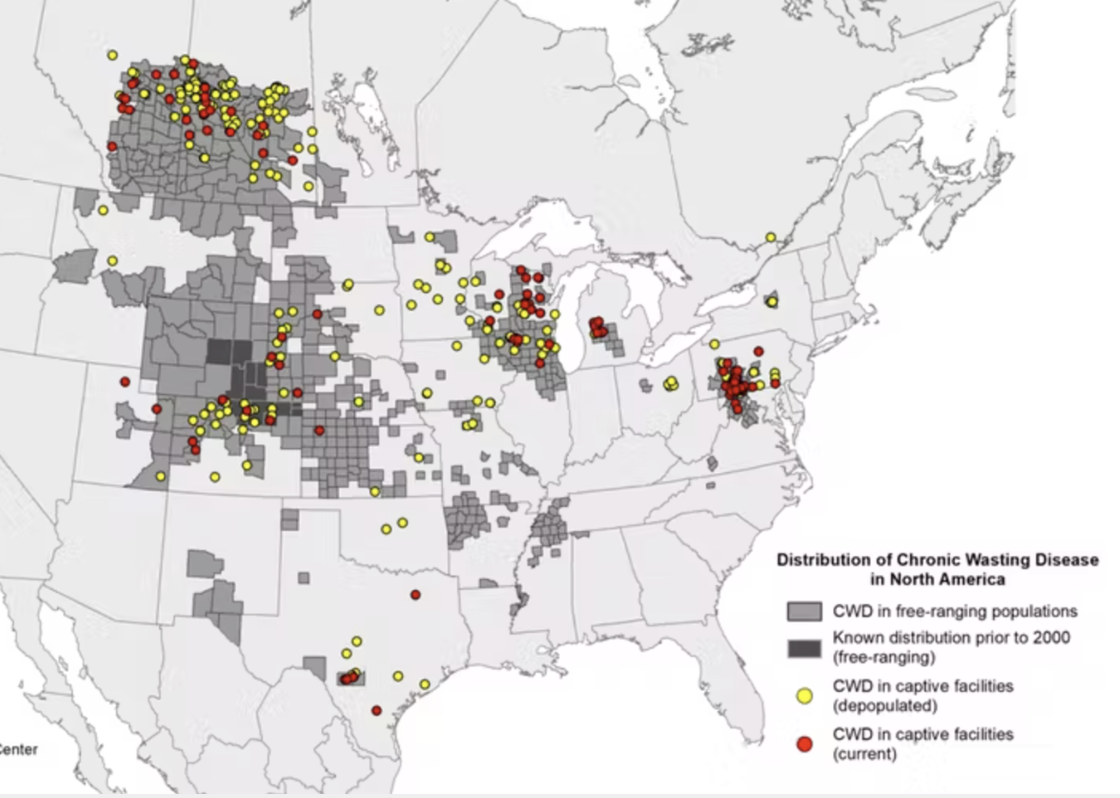
Speaking of Zombies… CWD is really becoming a problem.
-
One thing you can do to improve shelf life after processing is to vacuum seal smaller packages of jerky before putting them in storage.
Curing and drying will make it pretty much biologically stable, however you may still have mold and oxidation (rancidity) if it is simply stored in bulk.
Vacuum sealing will help inhibit both mold and oxidation.
Vacuum sealing requires a little planning since once you break the seal, you have lost the preservative/protection, thus the reason behind dividing the batch into smaller vacuum sealed packages. -
Hi everyone,
I finally worked up the courage to join and ask a question so here goes. Sorry it’s kind of weird…
A buddy of mine asked if I knew how to make “survival jerky” and I’m trying figure it out. By survival jerky I mean a long term shelf stable product that could be stored for long periods without refrigeration and used when needed. Think of something like an MRE in the military. Here are my ideas so far. Please let me know if I’m on the right track or need to do something else.
It would have start out being a very lean whole muscle product.
I would need to add sure cure but can’t seem to find the conversion table for 1 or 5 pound batches.
I would start it in the oven for a while to get the internal temperature up to 180ish
Take it to the dehydrator and let it sit in there until the pieces break cleanly apart. Basically dehydrated into a crispy strip.
Anyone else tried to make any meat products for long term storage?
Thanks, Hellbent
Hellbent Welcome aboard, great site with a lot of people willing to help.
-
-
Jonathon I am hoping they can figure this stuff out and stop the spread.
-
Wow thank you all for the great replies! That helps tremendously as those are excellent points and good links.
Jonathan - thanks for the link I knew I’d seen it somewhere on the site but just couldn’t find it. I would eat raw steaks with you but would throw them on a fire for two seconds each side to get the grill marks. I like grill marks…
Kyle - thanks man yeah you guys have been awesome
Dave - I will have to check out those videos. Biltong is a thing I’ve been wanting to work on for awhile now. We have a bunch of South African dudes here working for the grain elevators and big farms. I need to get lessons from them while they’re here.
Process head - you’re spot on with the vacuum sealing. I didn’t think about mold and all that great point and it would make it convenient to put in an emergency kit like for a car or take hiking or hunting.
Bocephus - thanks I’m sure glad I finally joined
Departing contestant -. I think you’re right about doing only dry seasonings and long smoke or dry times. you make an excellent point about back in the day. How did they do it and what did they know or do that maybe we don’t know nowadays. There is a lot to be learned from old timers
-
Wow thank you all for the great replies! That helps tremendously as those are excellent points and good links.
Jonathan - thanks for the link I knew I’d seen it somewhere on the site but just couldn’t find it. I would eat raw steaks with you but would throw them on a fire for two seconds each side to get the grill marks. I like grill marks…
Kyle - thanks man yeah you guys have been awesome
Dave - I will have to check out those videos. Biltong is a thing I’ve been wanting to work on for awhile now. We have a bunch of South African dudes here working for the grain elevators and big farms. I need to get lessons from them while they’re here.
Process head - you’re spot on with the vacuum sealing. I didn’t think about mold and all that great point and it would make it convenient to put in an emergency kit like for a car or take hiking or hunting.
Bocephus - thanks I’m sure glad I finally joined
Departing contestant -. I think you’re right about doing only dry seasonings and long smoke or dry times. you make an excellent point about back in the day. How did they do it and what did they know or do that maybe we don’t know nowadays. There is a lot to be learned from old timers
Hellbent said in Zombie Apocalypse Jerky? Extended Shelf Life?:
Wow thank you all for the great replies! That helps tremendously as those are excellent points and good links.
Jonathan - thanks for the link I knew I’d seen it somewhere on the site but just couldn’t find it. I would eat raw steaks with you but would throw them on a fire for two seconds each side to get the grill marks. I like grill marks…
Kyle - thanks man yeah you guys have been awesome
Dave - I will have to check out those videos. Biltong is a thing I’ve been wanting to work on for awhile now. We have a bunch of South African dudes here working for the grain elevators and big farms. I need to get lessons from them while they’re here.
Process head - you’re spot on with the vacuum sealing. I didn’t think about mold and all that great point and it would make it convenient to put in an emergency kit like for a car or take hiking or hunting.
Bocephus - thanks I’m sure glad I finally joined
Departing contestant -. I think you’re right about doing only dry seasonings and long smoke or dry times. you make an excellent point about back in the day. How did they do it and what did they know or do that maybe we don’t know nowadays. There is a lot to be learned from old timers
Welcome. You’ll get a lot of good info here.
If you want to reference someone as you just did. Try this.
Use the @ symbol. If the name doesn’t pop up your looking for, start typing the name and you’ll get some hits.Good luck, and thanks for being here.
-
Hellbent
Just that easy.
-
Hi everyone,
I finally worked up the courage to join and ask a question so here goes. Sorry it’s kind of weird…
A buddy of mine asked if I knew how to make “survival jerky” and I’m trying figure it out. By survival jerky I mean a long term shelf stable product that could be stored for long periods without refrigeration and used when needed. Think of something like an MRE in the military. Here are my ideas so far. Please let me know if I’m on the right track or need to do something else.
It would have start out being a very lean whole muscle product.
I would need to add sure cure but can’t seem to find the conversion table for 1 or 5 pound batches.
I would start it in the oven for a while to get the internal temperature up to 180ish
Take it to the dehydrator and let it sit in there until the pieces break cleanly apart. Basically dehydrated into a crispy strip.
Anyone else tried to make any meat products for long term storage?
Thanks, Hellbent
Hellbent Welcome aboard & welcome to the neighborhood. Keep on asking questions & making suggestions, Participation is amazing.
-
Wow thank you all for the great replies! That helps tremendously as those are excellent points and good links.
Jonathan - thanks for the link I knew I’d seen it somewhere on the site but just couldn’t find it. I would eat raw steaks with you but would throw them on a fire for two seconds each side to get the grill marks. I like grill marks…
Kyle - thanks man yeah you guys have been awesome
Dave - I will have to check out those videos. Biltong is a thing I’ve been wanting to work on for awhile now. We have a bunch of South African dudes here working for the grain elevators and big farms. I need to get lessons from them while they’re here.
Process head - you’re spot on with the vacuum sealing. I didn’t think about mold and all that great point and it would make it convenient to put in an emergency kit like for a car or take hiking or hunting.
Bocephus - thanks I’m sure glad I finally joined
Departing contestant -. I think you’re right about doing only dry seasonings and long smoke or dry times. you make an excellent point about back in the day. How did they do it and what did they know or do that maybe we don’t know nowadays. There is a lot to be learned from old timers
Hellbent welcome and good luck with your survivel jerky.
-
Welcome, for really shelf stable meat products jerky is not the answer. Dried beef and canned meats are more shelf stable than traditional jerky, but for the real deal pemmican would be a better solution. MRE’s do not hold up really well unless kept in perfect conditions thus when you see the inspection date on the MRE package that is under ideal conditions. Yes I have tested them under real world conditions and while still sorta eatable the color, taste, and texture was severely degraded outside of those perfect storage conditions. As processhead stated mold can also be a problem so look into potassium sorbate to inhibit that growth for long term storage and oxygen absorbers.








Hello! It looks like you're interested in this conversation, but you don't have an account yet.
Getting fed up of having to scroll through the same posts each visit? When you register for an account, you'll always come back to exactly where you were before, and choose to be notified of new replies (either via email, or push notification). You'll also be able to save bookmarks and upvote posts to show your appreciation to other community members.
With your input, this post could be even better 💗
Register LoginSponsored By: