Specialty Sausage: 202 Weisswurst
-

Specialty Sausage: 202 Weisswurst
Attend this entry-level class from Meatgistics University by watching the video, reading the article and post any questions you have!


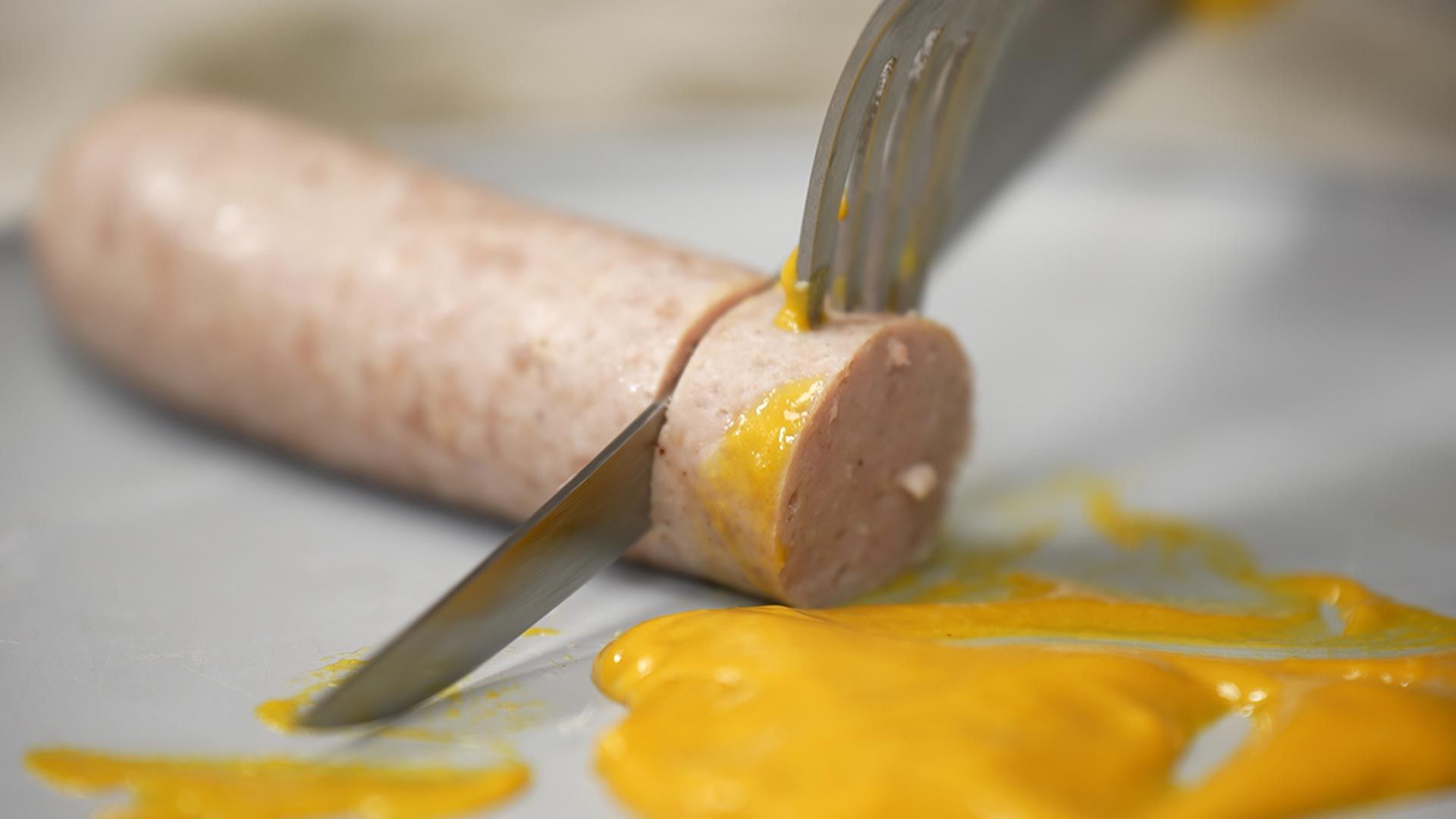
What is Weisswurst?
Weisswurst is a Bavarian sausage usually partially made from some veal and pork bacon. Seasonings can vary, but lemon, onion, and parsley are traditional. Must be cooked in water to avoid a Maillard reaction or charring. We chose to sous vide our sausage. This also helps with keeping the conventional white color. This sausage is full of flavor but does offer an excellent base if wanting to experiment with other flavors. Of course, serving with mustard is a MUST!
Meat Block
30% lb of Pork Shoulder
70% lb of Rose Veal
Weisswurst Seasoning
12 oz Ice Water
2 oz of Cold Phosphate per 25 lb of meatEquipment
Walton’s #22 Meat Grinder
Walton’s One Shot Grinder Head
Walton’s 30 lb Electric Sausage StufferPrep & Grind
Cut your meat up into small enough to fit down the throat of your grinder. We used the Walton’s #22 and we used the Walton’s One-Shot Grinder Head attachment. This replaces the entire head assembly of your grinder and can take you from whole muscle to second grind 1/8" plate meat that would be ready for snack sticks, summer sausage, or any cured sausage. Even though this is a fresh sausage we still want to run it through a 1/8" plate at least. Weisswurst is supposed to have a hotdog-like texture, so it needs to be broken down thoroughly. If you have access to one bowl or buffalo chopper or mincer can be used to achieve the desired level of emulsification. If you do use a chopper or mincer, you need to add ice water to keep the meat cold.
Additives & Meat Mixing
This is a special fresh sausage, so we want to be careful with the additives we are using. Weisswurst is supposed to be a white-colored sausage even after it has been cooked so we do not want to add anything that could change that color. We added 2 oz of Cold Phosphate directly to our water and stirred it until it was totally dissolved. The phosphate is going to increase the pH of the meat which increases the water-holding capacity of the meat. We then will add the seasoning and the water to the meat and mix it until we are just shy of full protein extraction. Remember, we want a smoother texture than a normal fresh sausage here.
Sausage Stuffing
We are using 30mm Fresh Collagen for this, which I would highly recommend. The reason for this is that we are going to cook these in hot water and then peel the casing off the sausage before serving, and the collagen will naturally want to peel off sausage when it is cooked in water. We used our new 30 lb Electric Sausage Stuffer for these, and even with the reduced water content, the stuffer worked wonderfully.
Appearance
Weisswurst is supposed to be a white sausage after it is cooked, so we have a limited number of ways we can prepare it. We cannot grill or overheat it as we will create a Maillard reaction, we can’t smoke it as we might have too much smoke adhesion. So, the best way we know how to do this is with a Sous Vide cooker.
Cook In Water
Set a sous vide cooker, or stabilize a pot of water at 180° and cook until the internal temp is 160°. A good rule of thumb is 1 minute of cook time for every millimeter of diameter. Now, there are two schools of thought on an ice bath here. Some say bring it to the table in the hot water and some want the ice bath. We did not use an ice bath and the casing peels much easier when the sausage was still hot, but do with that information what you will, there is no wrong answer here.
Serving
Bring to the table and serve hot with some Tangy Mustard, a Bavarian pretzel goes VERY well with them. Remember this is supposed to be eaten before the noon bell, so eat up!
Watch Walton’s: Specialty Sausage: 202 Weisswurst
Shop waltonsinc.com for Fresh Collagen Casings
Shop waltonsinc.com for Weisswurst Seasoning
Shop waltonsinc.com for Sausage Stuffers
-
 J Jonathon pinned this topic on
-
Great recipe and video, thanks!
-
One of my all time favorites. Good that you have the key process points documented for making them.
In case the price of veal scares anyone away from wanting to try making these, know that you can make an excellent all-pork version by just by using 100% boneless pork butt, preferably one with a little thicker fat cap.
I also like to use the traditional natural casings when stuffing weisswurst and eat them with the casing on so they have a nice snap.
Thermal processing by sous vide is a great way to cook them precisely and avoid any fat-out issues. Always good to monitor the IT on one while cooking to see when you hit the target temperature.
If cooking for the table, just serve them hot. If planning to eat within a couple of days, or freeze them later, I would recommend the ice bath to bring the IT down faster. -
Dave in AZ and processhead Thanks for the feedback! processhead I’d heard that it was “always” casingless but that was based off a few books/recipes that probably are a little overly traditional.
Get more help with your processing questions and learn more about processing meat by subscribing to our waltonsinc.com youtube page at https://wltns.link/waltonstv I am a Gorilla, love yourself
-
Dave in AZ and processhead Thanks for the feedback! processhead I’d heard that it was “always” casingless but that was based off a few books/recipes that probably are a little overly traditional.
Jonathon I had heard the same thing about serving them with the casing peeled. I’m just too lazy to go to the extra work to do it.

Hello! It looks like you're interested in this conversation, but you don't have an account yet.
Getting fed up of having to scroll through the same posts each visit? When you register for an account, you'll always come back to exactly where you were before, and choose to be notified of new replies (either via email, or push notification). You'll also be able to save bookmarks and upvote posts to show your appreciation to other community members.
With your input, this post could be even better 💗
Register LoginSponsored By: