Meat Processing Equipment 302: Knife Sharpeners


-
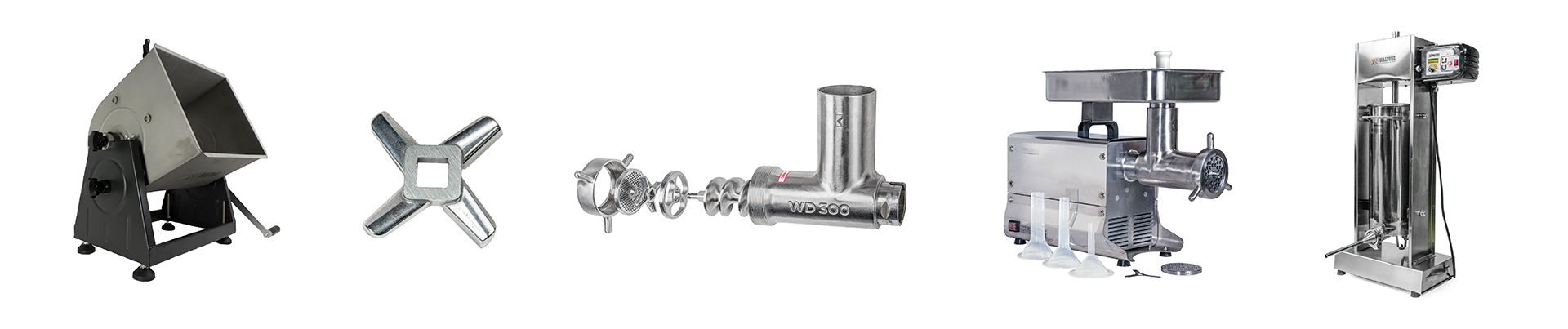
Meat Processing Equipment: 302 Knife Meat Grinders
Attend this class from Meatgistics University by watching the video, reading the article and post any questions you have!


Options
IM200 for stones
Truhone for
Nirey
SteelsEach knife performs a different task in both the processing floor and the kitchen. When we are cutting through lots of bone or heavy cartilage we want a thicker blade. A thin blade on a cleaver is going to be prone to bending or folding, a thicker blade will be better for that purpose but with a thicker blade, it will be less “sharp” Basically they are mutually exclusive to a degree. A sharper knife will be less durable and a thicker edge will be more durable but less sharp.
Before we go any further we do need to talk about the numbers on the degrees we are about to give. Almost any knife you are going to be using for what we are talking about will be double beveled, meaning it has a cutting edge on both sides. So, when I say a 16° am I talking about an 8 on each side, or am I talking about a 16 on each side? We generally mean that it will be a 16° angle on one edge and that the cumulative angle will be 32°.
So with that in mind, we are looking at these angles for specific knives.
Angles
30-35:
Cleaver and Machete
A nice thick angle as it needs to be durable and good for chopping. If we tried to put an edge on this similar to a fillet knife there is a good chance that we would chip it right away.25-30:
Hunting Knife
These need to be sharp enough to make some good cuts but also should be very durable. You want them to stand up to at least a weekend of hard use hence the hedge between a kitchen knife and a machete, we want it to be able to do a little bit of both. An easy mistake to make with your pocket knife is trying to get it down to razor sharpness. These blades need to be durable as well as sharp.
Survival
ScubaRight in here somewhere is probably the “best” match of sharpness to durability comes in. The total cumulative angle of 40 tends to be the number a lot of manufacturers use when creating a knife that will be used for chopping and slicing.
17-25:
Chef’s
These are the knives that are going to have to do the most straddling of two worlds. Your classic home chef’s knife gets used for all sorts of jobs in the kitchen, hence why it’s also often called a kitchen knife. People use it for separating ribs and for cutting the cooked chicken into small strips for salad. I’ve also seen people debone pork butts with these knives, though I wouldn’t recommend it
Kitchen
Carving12-17:
Boning
Really sharp knives that need to be babied in a certain sense. Now, I have boning in this range but really 15-17 is where they should live, you don’t want a boning blade with a 12 edge or every time you hit anything with it, it will fold and create burs. The sushi knives are often knives that will never touch a cutting surface, they go through the meat only, that is why you can have a hefty looking blade with an almost razor sharpness
Fillet
Sushi
Paring7-12:
Straight Razor
We shouldn’t have too much use for these in the kitchen really but just to give you a reference on how close a fillet knife is to an actual razor. This range would also include X-acto blades and have minimal if any use in the sausage/jerky-making work.Shop waltonsinc.com for Knife Sharpeners
Shop waltonsinc.com for Knives
Get more help with your processing questions and learn more about processing meat by subscribing to our waltonsinc.com youtube page at https://wltns.link/waltonstv I am a Gorilla, love yourself
-
Meat Processing Equipment: 302 Knife Meat Grinders
Attend this class from Meatgistics University by watching the video, reading the article and post any questions you have!
Options
IM200 for stones
Truhone for
Nirey
SteelsEach knife performs a different task in both the processing floor and the kitchen. When we are cutting through lots of bone or heavy cartilage we want a thicker blade. A thin blade on a cleaver is going to be prone to bending or folding, a thicker blade will be better for that purpose but with a thicker blade, it will be less “sharp” Basically they are mutually exclusive to a degree. A sharper knife will be less durable and a thicker edge will be more durable but less sharp.
Before we go any further we do need to talk about the numbers on the degrees we are about to give. Almost any knife you are going to be using for what we are talking about will be double beveled, meaning it has a cutting edge on both sides. So, when I say a 16° am I talking about an 8 on each side, or am I talking about a 16 on each side? We generally mean that it will be a 16° angle on one edge and that the cumulative angle will be 32°.
So with that in mind, we are looking at these angles for specific knives.
Angles
30-35:
Cleaver and Machete
A nice thick angle as it needs to be durable and good for chopping. If we tried to put an edge on this similar to a fillet knife there is a good chance that we would chip it right away.25-30:
Hunting Knife
These need to be sharp enough to make some good cuts but also should be very durable. You want them to stand up to at least a weekend of hard use hence the hedge between a kitchen knife and a machete, we want it to be able to do a little bit of both. An easy mistake to make with your pocket knife is trying to get it down to razor sharpness. These blades need to be durable as well as sharp.
Survival
ScubaRight in here somewhere is probably the “best” match of sharpness to durability comes in. The total cumulative angle of 40 tends to be the number a lot of manufacturers use when creating a knife that will be used for chopping and slicing.
17-25:
Chef’s
These are the knives that are going to have to do the most straddling of two worlds. Your classic home chef’s knife gets used for all sorts of jobs in the kitchen, hence why it’s also often called a kitchen knife. People use it for separating ribs and for cutting the cooked chicken into small strips for salad. I’ve also seen people debone pork butts with these knives, though I wouldn’t recommend it
Kitchen
Carving12-17:
Boning
Really sharp knives that need to be babied in a certain sense. Now, I have boning in this range but really 15-17 is where they should live, you don’t want a boning blade with a 12 edge or every time you hit anything with it, it will fold and create burs. The sushi knives are often knives that will never touch a cutting surface, they go through the meat only, that is why you can have a hefty looking blade with an almost razor sharpness
Fillet
Sushi
Paring7-12:
Straight Razor
We shouldn’t have too much use for these in the kitchen really but just to give you a reference on how close a fillet knife is to an actual razor. This range would also include X-acto blades and have minimal if any use in the sausage/jerky-making work.Shop waltonsinc.com for Knife Sharpeners
Shop waltonsinc.com for Knives
Jonathon Great topic and one that anyone who owns a knife should have a better understanding of.
Since much of what happens when sharpening a knife is too small to really see clearly, some illustrations would really help folks to visualize what is happening when they sharpen each edge of a blade and then how to remove the remaining wire edge that’s left to finish the job. -
Meat Processing Equipment: 302 Knife Meat Grinders
Attend this class from Meatgistics University by watching the video, reading the article and post any questions you have!
Options
IM200 for stones
Truhone for
Nirey
SteelsEach knife performs a different task in both the processing floor and the kitchen. When we are cutting through lots of bone or heavy cartilage we want a thicker blade. A thin blade on a cleaver is going to be prone to bending or folding, a thicker blade will be better for that purpose but with a thicker blade, it will be less “sharp” Basically they are mutually exclusive to a degree. A sharper knife will be less durable and a thicker edge will be more durable but less sharp.
Before we go any further we do need to talk about the numbers on the degrees we are about to give. Almost any knife you are going to be using for what we are talking about will be double beveled, meaning it has a cutting edge on both sides. So, when I say a 16° am I talking about an 8 on each side, or am I talking about a 16 on each side? We generally mean that it will be a 16° angle on one edge and that the cumulative angle will be 32°.
So with that in mind, we are looking at these angles for specific knives.
Angles
30-35:
Cleaver and Machete
A nice thick angle as it needs to be durable and good for chopping. If we tried to put an edge on this similar to a fillet knife there is a good chance that we would chip it right away.25-30:
Hunting Knife
These need to be sharp enough to make some good cuts but also should be very durable. You want them to stand up to at least a weekend of hard use hence the hedge between a kitchen knife and a machete, we want it to be able to do a little bit of both. An easy mistake to make with your pocket knife is trying to get it down to razor sharpness. These blades need to be durable as well as sharp.
Survival
ScubaRight in here somewhere is probably the “best” match of sharpness to durability comes in. The total cumulative angle of 40 tends to be the number a lot of manufacturers use when creating a knife that will be used for chopping and slicing.
17-25:
Chef’s
These are the knives that are going to have to do the most straddling of two worlds. Your classic home chef’s knife gets used for all sorts of jobs in the kitchen, hence why it’s also often called a kitchen knife. People use it for separating ribs and for cutting the cooked chicken into small strips for salad. I’ve also seen people debone pork butts with these knives, though I wouldn’t recommend it
Kitchen
Carving12-17:
Boning
Really sharp knives that need to be babied in a certain sense. Now, I have boning in this range but really 15-17 is where they should live, you don’t want a boning blade with a 12 edge or every time you hit anything with it, it will fold and create burs. The sushi knives are often knives that will never touch a cutting surface, they go through the meat only, that is why you can have a hefty looking blade with an almost razor sharpness
Fillet
Sushi
Paring7-12:
Straight Razor
We shouldn’t have too much use for these in the kitchen really but just to give you a reference on how close a fillet knife is to an actual razor. This range would also include X-acto blades and have minimal if any use in the sausage/jerky-making work.Shop waltonsinc.com for Knife Sharpeners
Shop waltonsinc.com for Knives
Jonathon
Great info. Oh yeah, more Tru Hone pressure, hmm. -
Nice vid. Another you could add to your list, would be how to sharpen grinder plates and blades using some glass and wetdry sandpaper sheets. You could also mention it’s the #1 way to sharpen tool blades and knives also, using an angle guide. Then you could add sandpaper and the angle guides as products you sell. Pretty much everyone I know who sharpens anything like tools has moved to glass/sandpaper. 5 to 10 min and grinders would always be sharp…
-
I am terrible at sharpening, I have probably 30 knives that need it desperately. Great info but I doubt I’d still achieve the task correctly
-
I am terrible at sharpening, I have probably 30 knives that need it desperately. Great info but I doubt I’d still achieve the task correctly
twilliams said in Meat Processing Equipment 302: Knife Sharpeners:
I am terrible at sharpening, I have probably 30 knives that need it desperately. Great info but I doubt I’d still achieve the task correctly
Ask Jonathon to send you a Tru Hone for an independent analysis of that product. When you’re done… Send it back.
P.S. I’ll drive down with my knives for a second opinion.

-
PapaSop You wil never regret getting one.
-
bocephus said in Meat Processing Equipment 302: Knife Sharpeners:
PapaSop You wil never regret getting one.
The plan is… If I’d would win this month’s give away that I already have, I’d swap it out for the Tru Hone. Hmm. One can only wish. Thanks!
-
 J Jonathon pinned this topic on



Hello! It looks like you're interested in this conversation, but you don't have an account yet.
Getting fed up of having to scroll through the same posts each visit? When you register for an account, you'll always come back to exactly where you were before, and choose to be notified of new replies (either via email, or push notification). You'll also be able to save bookmarks and upvote posts to show your appreciation to other community members.
With your input, this post could be even better 💗
Register LoginSponsored By: