Dried beef for chipped beef
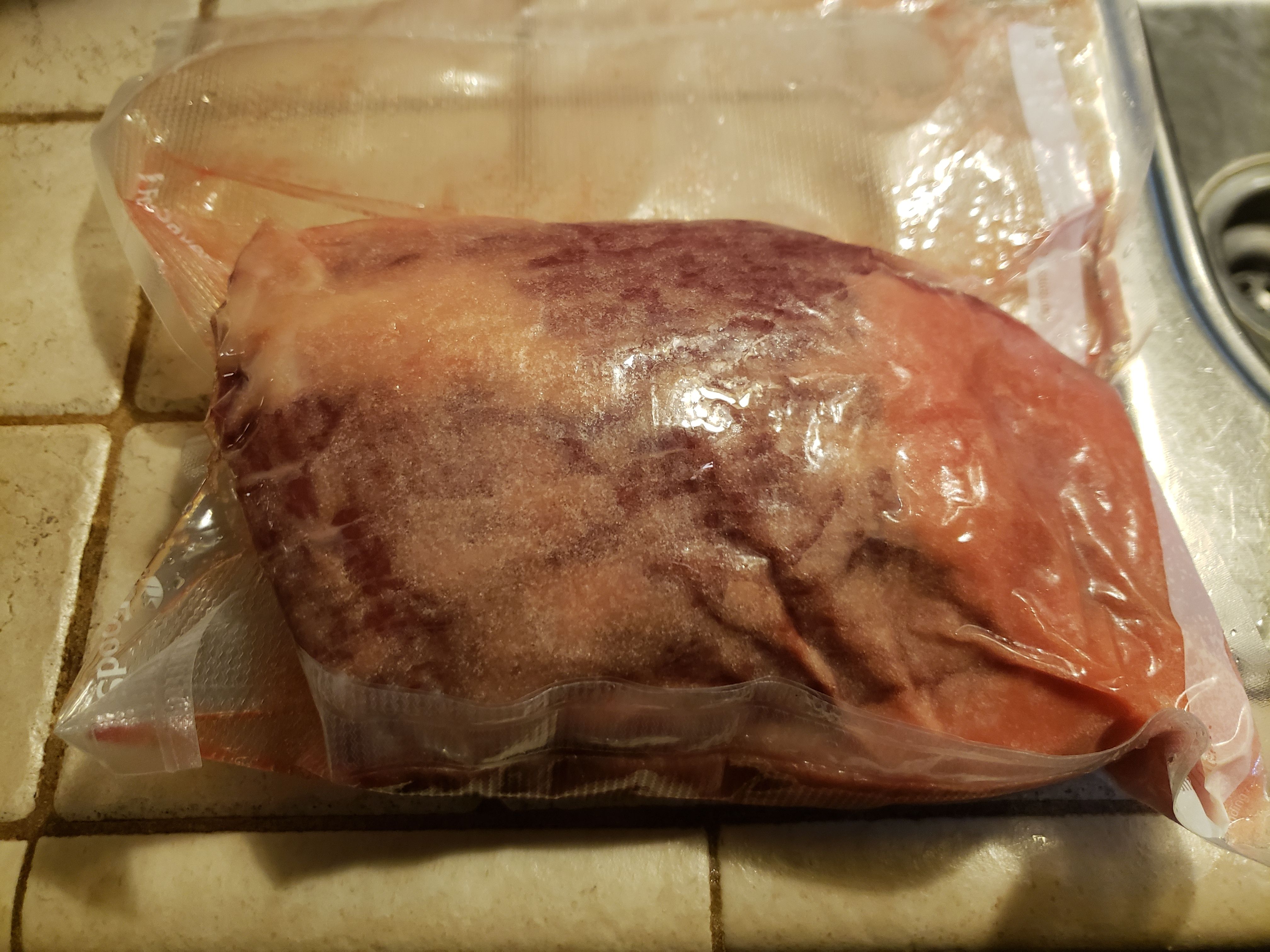
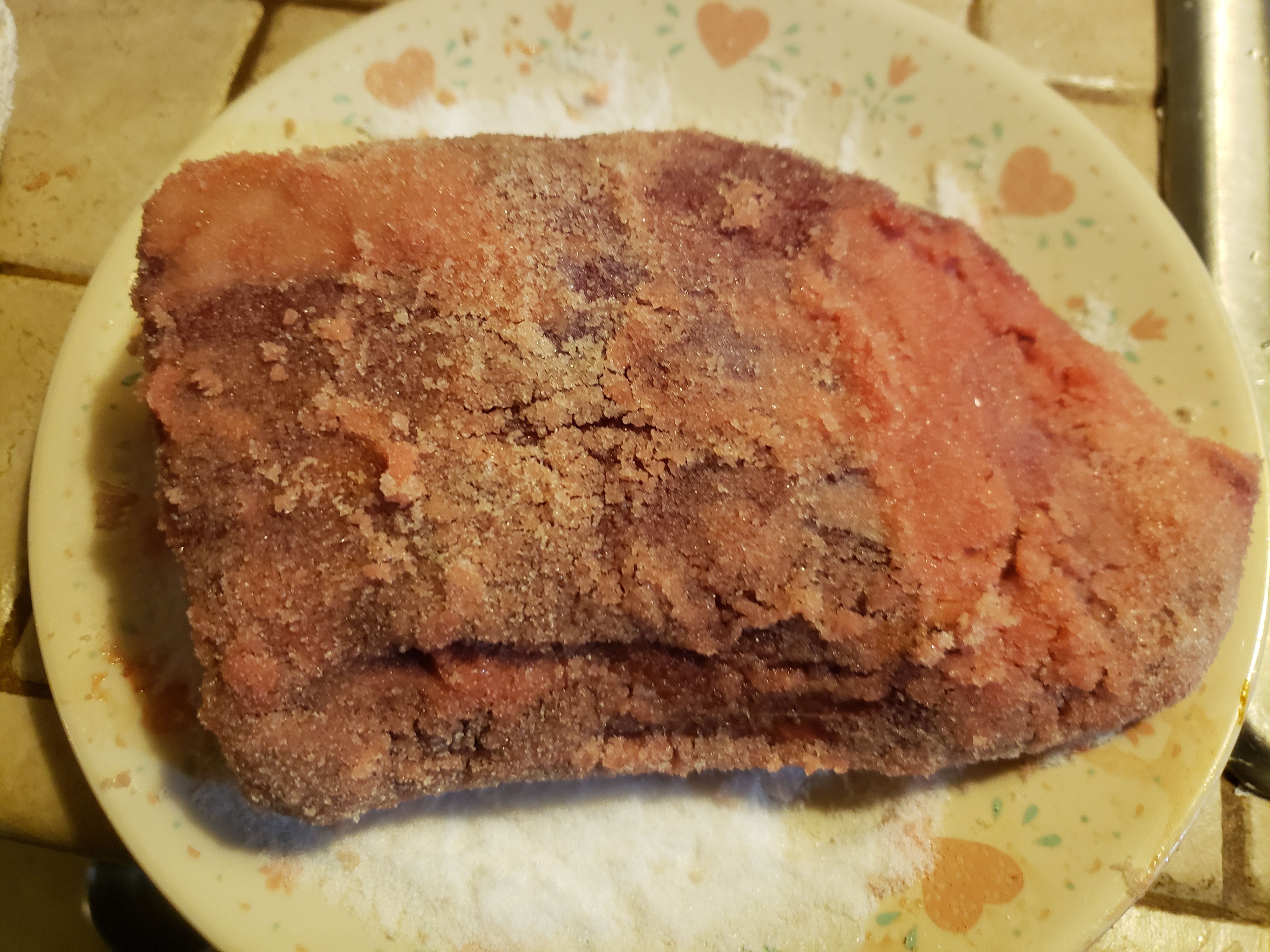
-
processhead said in Dried beef for chipped beef:
the sous vide step might be redundant if you are hot canning the meat
I’m betting you are spot on with that observation and my first thought was the same, but I went with the additional step as a safety precaution, insurance. As far as the meat falling apart my only clue is the commercial product, so that will have to be experimented with to see, thank you for the very sound advice.
mrobisr I like your 160f lethality treatment pre-drying, as that is how the FSIS jerky i.e. dried meat recommends, so you don’t make the bacteria or spores resistant to heat by drying first. Thx for your reply re salt levels, and I hope you post and say how you like it when done. Since dried beef is often added to gravy for sos, it probably can be as salty as you want if you just let that be the salt for the whole gravy.
You mentioned the sliceability of the dried meat, whether it will stay together. I don’t know at all, but this is something I recently read that may be helpful to you later, if you find issues. They add Kappa carageenan to meat to help it form a nice strong interstitial gel for when they want to slice cooked deli meat thin. From Marianski book, “Kappa - meat products, very strong gel. It is currently the most used type of carrageenan in meat products. It improves sliceability of thinly cut meatKappa carrageenan gels better in the presence of alkali agents such as potassium chloride (KCL). Enough potassium chloride is usually added to the carrageenan blend to create a strong gel. Potassium chloride is the same salt that is added to Morton’s Low Salt, at 50% level, thus the salt itself promotes the development of strong gel. In addition milk protein is a strong promoter of carrageenan gels. Adding caseinate (milk protein) or non-fat dry milk will assist in the development of strong carrageenan gel. Kappa and Iota carrageenan are only partially cold water soluble and need to be heated for full activation.”
Anyways, when I read about carageenan I wasn’t sure when I might use it, but my Dad was in charge of his chemical company carageenan product line, so Im always thinking about it
 Maybe if your meat is hard to slice nicely, the info could be useful but really, I don’t think you will have any problems, your plan sounds great!
 -
Dave in AZ I went with 10% because I knew that once dried it would be totally inhospitable to bacteria. The rinse is not really for reduction of salt, but to start the equilibration of the meat. The article you posted makes a very good point and I think I’m probably going to try and skip the equilibration step. The commercial product does have nitrite and SE, but it is also a ground and formed product and mine is not, so I felt that I would try just the salt first and see if I like the taste. I have several more rounds in the freezer, so I’m prepared to do the nitrite cure next if the taste is not according to my taste. Thank you for the article it was very informative.
I re-read your processing steps and realized I completely missed the part about dehydrating the cured beef prior to hot-canning.
Since much of the moisture will be removed from the meat, hot-canning will probably do very little to make it " fall apart tender" as I said in my earlier comment.
The moist heat from the sous vide will probably make it pretty darned tender though.
-
mrobisr I like your 160f lethality treatment pre-drying, as that is how the FSIS jerky i.e. dried meat recommends, so you don’t make the bacteria or spores resistant to heat by drying first. Thx for your reply re salt levels, and I hope you post and say how you like it when done. Since dried beef is often added to gravy for sos, it probably can be as salty as you want if you just let that be the salt for the whole gravy.
You mentioned the sliceability of the dried meat, whether it will stay together. I don’t know at all, but this is something I recently read that may be helpful to you later, if you find issues. They add Kappa carageenan to meat to help it form a nice strong interstitial gel for when they want to slice cooked deli meat thin. From Marianski book, “Kappa - meat products, very strong gel. It is currently the most used type of carrageenan in meat products. It improves sliceability of thinly cut meatKappa carrageenan gels better in the presence of alkali agents such as potassium chloride (KCL). Enough potassium chloride is usually added to the carrageenan blend to create a strong gel. Potassium chloride is the same salt that is added to Morton’s Low Salt, at 50% level, thus the salt itself promotes the development of strong gel. In addition milk protein is a strong promoter of carrageenan gels. Adding caseinate (milk protein) or non-fat dry milk will assist in the development of strong carrageenan gel. Kappa and Iota carrageenan are only partially cold water soluble and need to be heated for full activation.”
Anyways, when I read about carageenan I wasn’t sure when I might use it, but my Dad was in charge of his chemical company carageenan product line, so Im always thinking about it
Maybe if your meat is hard to slice nicely, the info could be useful but really, I don’t think you will have any problems, your plan sounds great!Dave in AZ said in Dried beef for chipped beef:
Since dried beef is often added to gravy for sos, it probably can be as salty as you want if you just let that be the salt for the whole gravy.
That was my thought exactly and you bring up some very good points that might be very useful depending on how this first experiment turns out, thank you so much for your very detailed evidence based info.
-
Dave in AZ said in Dried beef for chipped beef:
Since dried beef is often added to gravy for sos, it probably can be as salty as you want if you just let that be the salt for the whole gravy.
That was my thought exactly and you bring up some very good points that might be very useful depending on how this first experiment turns out, thank you so much for your very detailed evidence based info.
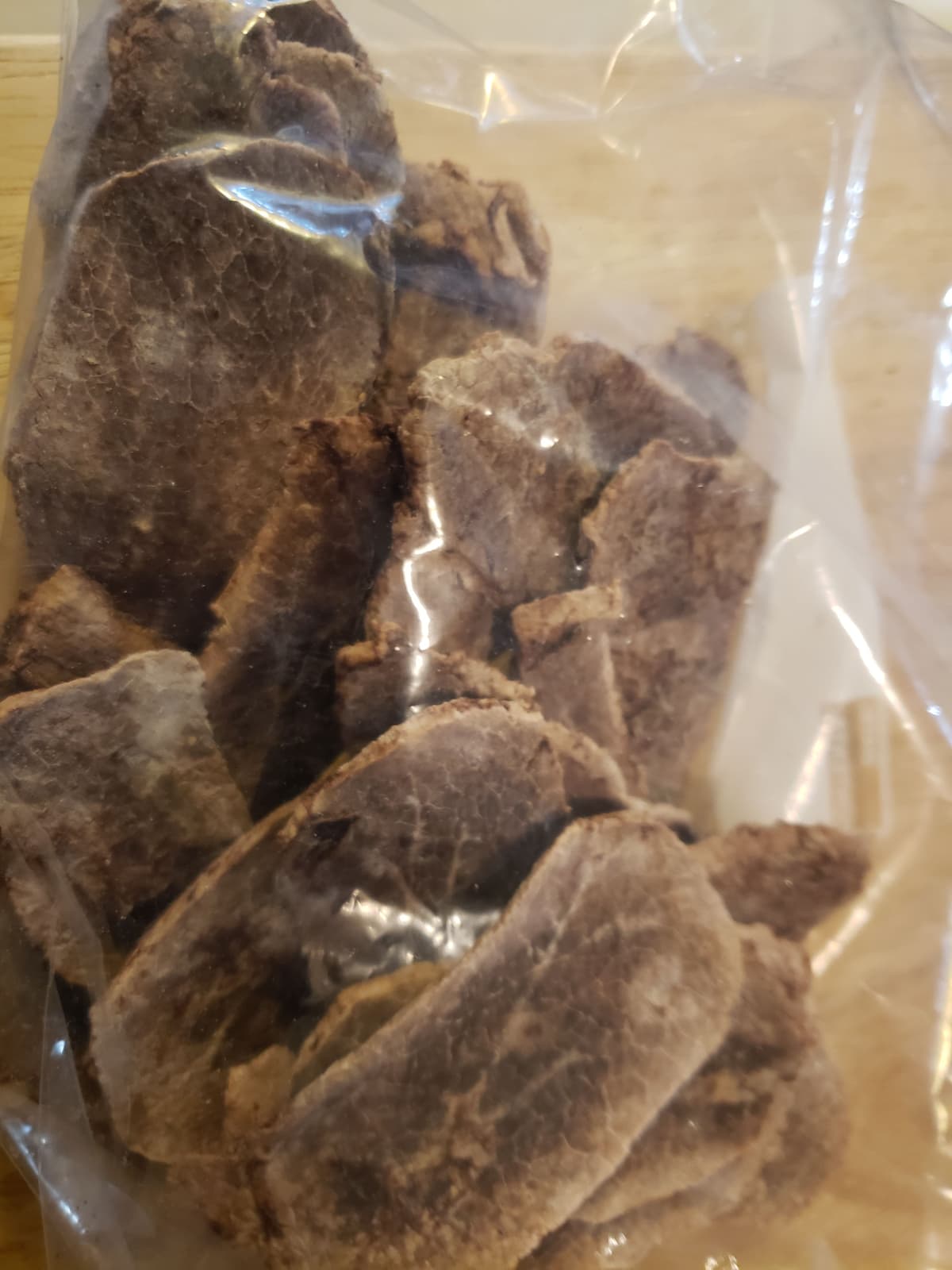
Update, the sous vide really equilibrated the meat way beyond what I could have ever imaged. The meat dried to the crumble level in two hours and no I was not expecting that at all. While without the cure the meat is basically white/grey in color and over drying the taste is actually very good. I put it in the fridge for now, but I’m wondering now about rancidity due to no antioxidant being present. My current thought is to can one jar for experimental purposes and freeze the rest just to make sure.
-
Update, the sous vide really equilibrated the meat way beyond what I could have ever imaged. The meat dried to the crumble level in two hours and no I was not expecting that at all. While without the cure the meat is basically white/grey in color and over drying the taste is actually very good. I put it in the fridge for now, but I’m wondering now about rancidity due to no antioxidant being present. My current thought is to can one jar for experimental purposes and freeze the rest just to make sure.
mrobisr looks like the learning/experimenting process continues. I am betting an answer will bring more questions.
-
Update, the sous vide really equilibrated the meat way beyond what I could have ever imaged. The meat dried to the crumble level in two hours and no I was not expecting that at all. While without the cure the meat is basically white/grey in color and over drying the taste is actually very good. I put it in the fridge for now, but I’m wondering now about rancidity due to no antioxidant being present. My current thought is to can one jar for experimental purposes and freeze the rest just to make sure.
-
Update, the sous vide really equilibrated the meat way beyond what I could have ever imaged. The meat dried to the crumble level in two hours and no I was not expecting that at all. While without the cure the meat is basically white/grey in color and over drying the taste is actually very good. I put it in the fridge for now, but I’m wondering now about rancidity due to no antioxidant being present. My current thought is to can one jar for experimental purposes and freeze the rest just to make sure.
mrobisr great update. How was the saltiness? This seems like a pretty tough project. I wonder if it is just dried with salt, uncooked, like biltong or prosciutto, then sliced?
-
As long as it tastes good, SOS wont last long enough to get rancid or frozen for that matter.
-
mrobisr great update. How was the saltiness? This seems like a pretty tough project. I wonder if it is just dried with salt, uncooked, like biltong or prosciutto, then sliced?
Dave in AZ The saltiness was a little more than you just want to sit down and eat, but it was not as bad as I was expecting and to put it in sos it would be perfect. I do believe the commercial product is cooked or to me it seems to be by the color, texture, and taste.
-
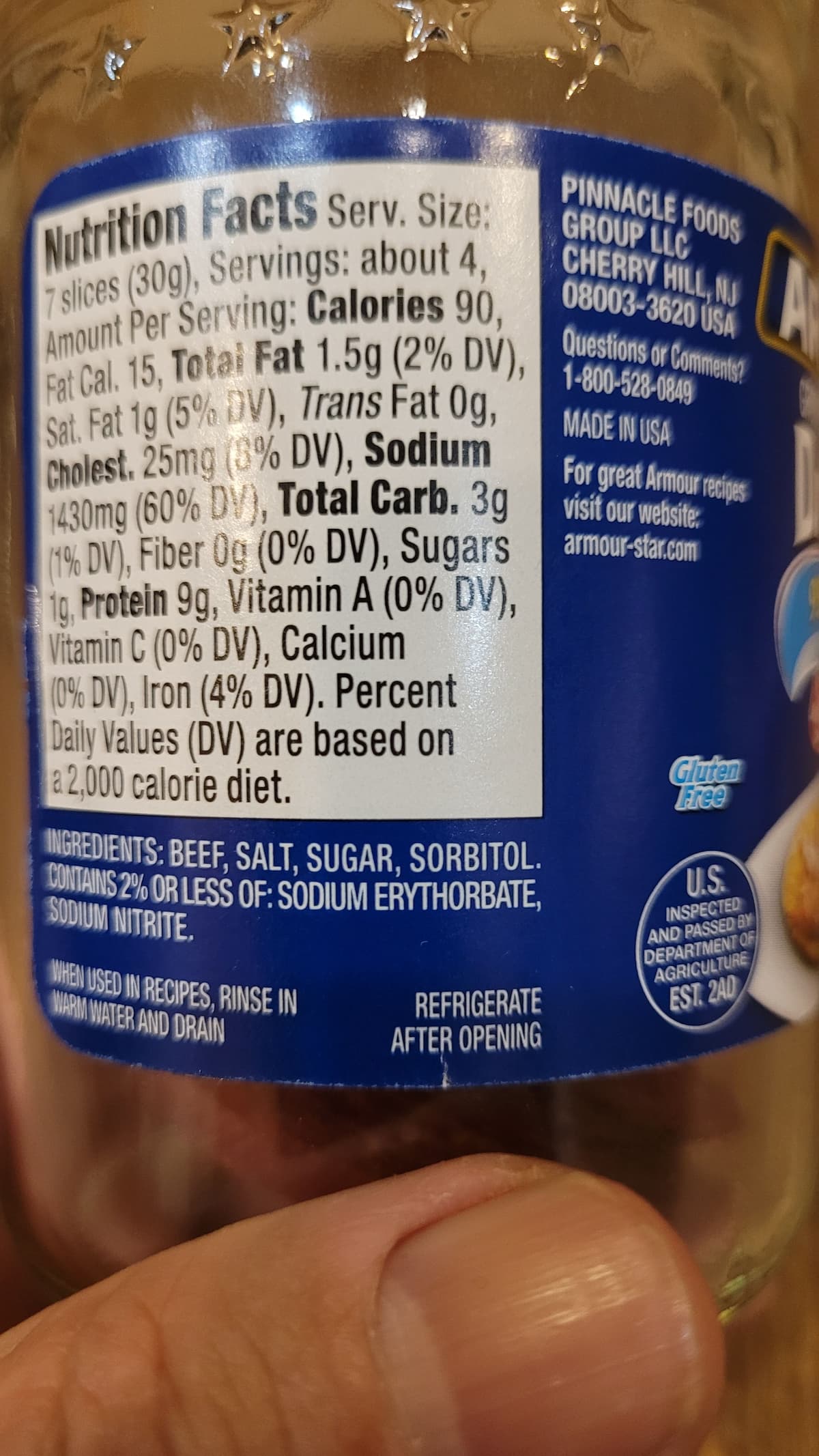
So I bought some of this today, thinking of you. I love it! Anyways, it is 11.9% salt in finished product. It has nitrate and sodium erythorbate cure accelerator. And it is definitely dried as its primary method, not cooked. 12% salt gets it at shelf stable Aw levels as is. They probably do it to 140s for a few minutes IAW FSIS lethality tables, but it really looks to me like it is mostly air dried then sliced.
Just thought I’d throw in a report since I can’t stop eating this super salty jar… -
So I bought some of this today, thinking of you. I love it! Anyways, it is 11.9% salt in finished product. It has nitrate and sodium erythorbate cure accelerator. And it is definitely dried as its primary method, not cooked. 12% salt gets it at shelf stable Aw levels as is. They probably do it to 140s for a few minutes IAW FSIS lethality tables, but it really looks to me like it is mostly air dried then sliced.
Just thought I’d throw in a report since I can’t stop eating this super salty jar…Dave in AZ Eat a couple cans of that and YOU will be shelf stable. lol
Please pass the water pitcher.
-
Dave in AZ Eat a couple cans of that and YOU will be shelf stable. lol
Please pass the water pitcher.
processhead They probably brew & sell beer as their side business.
-
So I bought some of this today, thinking of you. I love it! Anyways, it is 11.9% salt in finished product. It has nitrate and sodium erythorbate cure accelerator. And it is definitely dried as its primary method, not cooked. 12% salt gets it at shelf stable Aw levels as is. They probably do it to 140s for a few minutes IAW FSIS lethality tables, but it really looks to me like it is mostly air dried then sliced.
Just thought I’d throw in a report since I can’t stop eating this super salty jar… -
Update, the dried beef has been sitting in the fridge in the same bag since the OP and I just tried a piece and the flavor, color, or texture has not changed at all. My worry was rancidity, but so far there is not even a hint of off taste, so time permitting hopefully I will do some sos this week and go from there.






Hello! It looks like you're interested in this conversation, but you don't have an account yet.
Getting fed up of having to scroll through the same posts each visit? When you register for an account, you'll always come back to exactly where you were before, and choose to be notified of new replies (either via email, or push notification). You'll also be able to save bookmarks and upvote posts to show your appreciation to other community members.
With your input, this post could be even better 💗
Register LoginSponsored By: